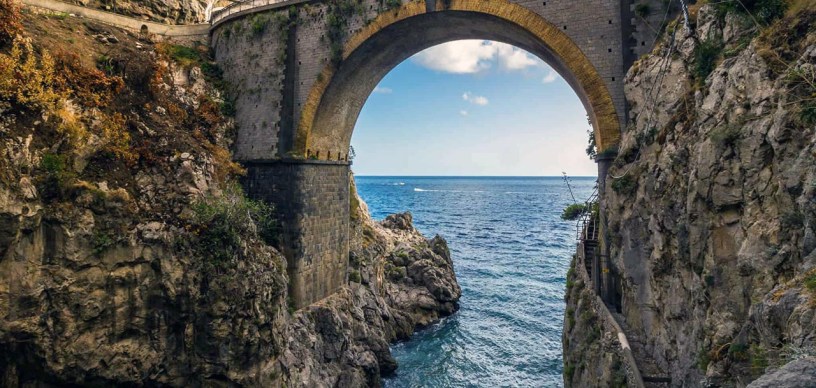
Immerse yourself in one of the most magical fjords in Europe, host to an exciting world diving championship.
“The competition is exciting, and he finally finds himself on the springboard for the last dive. He no longer cares about winning, he has proven to himself that he can do it. He closes his eyelids; in the darkness pierced by the sun his life passes quickly […] A deep breath and then down into the clear air to look for the sea” (That bridge over the fjord of Furore, Enzo Capuano)
A leap into the origins
In the atavistic industriousness of the Terra Furoris (as it was once called Furore), in one of the most beautiful fjords in Europe, a spectacular diving competition was hosted for 32 editions which brought together athletes from the international scene ( Spain, Switzerland, USA, Denmark, Bosnia Herzegovina, Italy, Portugal).
An event that combines the love for nature and the beauty of the landscape with the fervor of extreme sport: all this made possible by the resourcefulness of the Marmeeting Association and its president Oreste Varese.
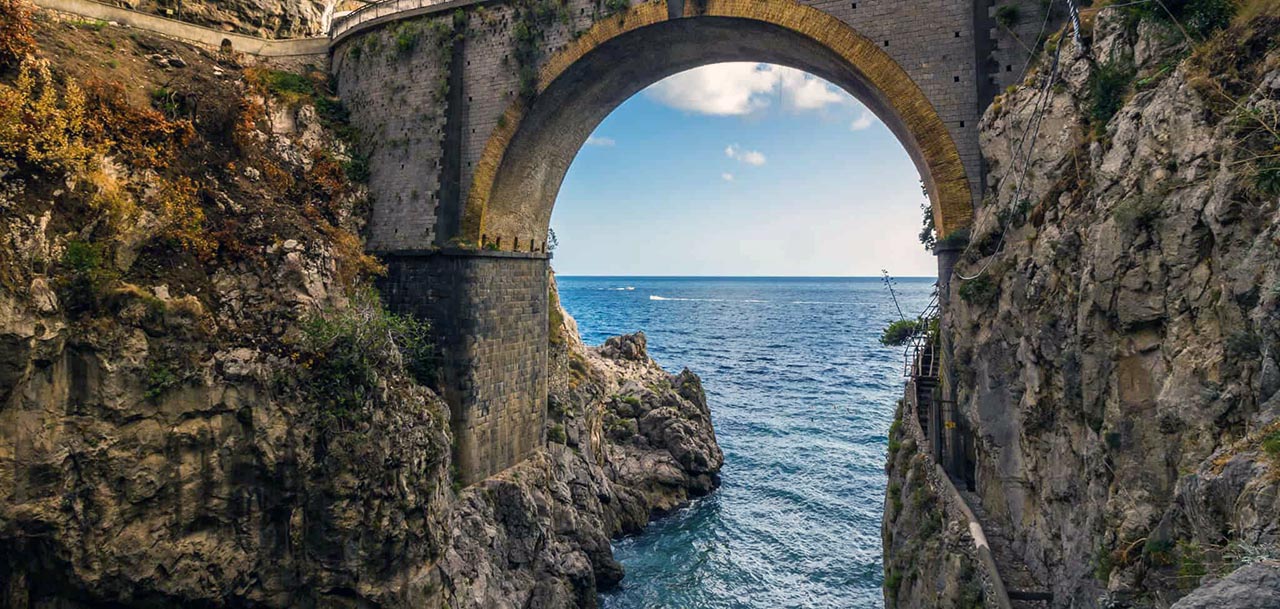
Photo of Vito Fusco
The German pioneers
And in an instant you dive from the Germany of 1811, where the birth of this fascinating sport took place, to the incomparable beauty of the Amalfi Coast of the twenty-first century.
A dive that starts from afar. The salt workers of Halle (Germany), who worked on the vaporization of the water of the Saale river, to extract the salt, then threw themselves into pools of fresh water to purge themselves of the residues. The thrill of being suspended just a breath away from the water, the passion of that gesture infected the gymnasts, who found it an excellent way to practice their acrobatics, thus protecting themselves from the danger of falling to the ground.
Modern declinations
Today, diving has a more refined technique; so much so that they often take names of animals with elegant postures.
One of the simplest, with a tense body and open arms, is called “swallow” in Sweden, and “swan” in the United States. In Italy, even more romantically we say “ad angelo”. It is no coincidence, in fact, that one of the greatest Italian protagonists of this sporting game, Klaus Dibiasi, was known as the “Blue Angel”.
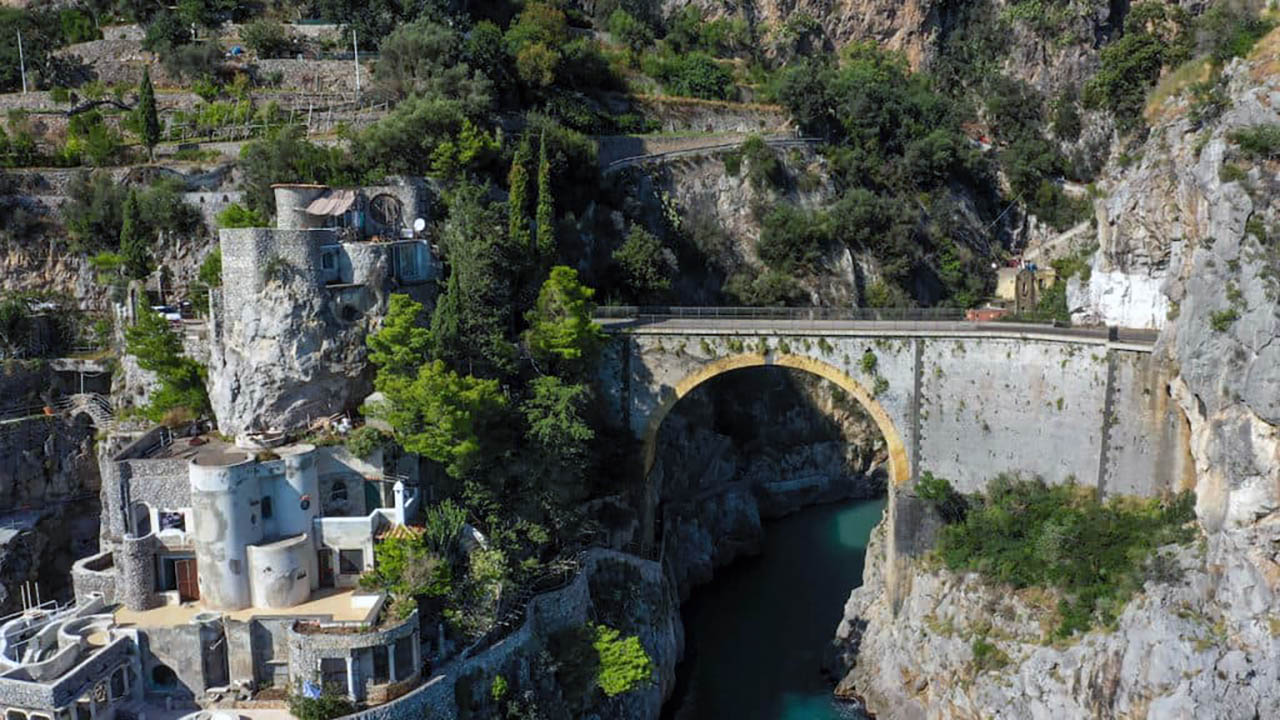
Photo of Vito Fusco
Il palcoscenico per volare a Furore
Per ospitare un campionato mondiale di tuffi acrobatici di tale portata è difficile immaginare uno scenario più pittoresco del fiordo di Furore. Uno dei due fiordi unici in Europa (secondo solo alla baia di Kotor, in Montenegro) di origine fluviale.
Sotto la grande arcata del ponte un lenzuolo di mare si sdraia sulla riva del borgo marinaro, e la smembrata cerniera di montagna che corre ripida dall’altopiano di Agerola fino al mare, scolpita dal fiume Schiato, decreta un eterno amore platonico tra i due margini di roccia. Si può giungere all’antico paesello per via mare o attraverso la rustica scalinata che serpeggia verso la baia.
L’innamoramento di Roberto Rossellini per Furore
L’atmosfera placida e onirica che si respira rievoca i ricordi del film “Amore”, girato qui con il regista Roberto Rossellini e Anna Magnani nel 1948.
Del loro tormentato amore non restano che due monazzeni di pescatori (vecchi depositi di attrezzi, nrd.) che comprarono qui e che la gente del posto ancora associa a loro. Rigogliosi embrioni arborei si insidiano tra le crepe del costone roccioso e la voce impetuosa del mare ricalca quel furore che è l’anima del luogo.
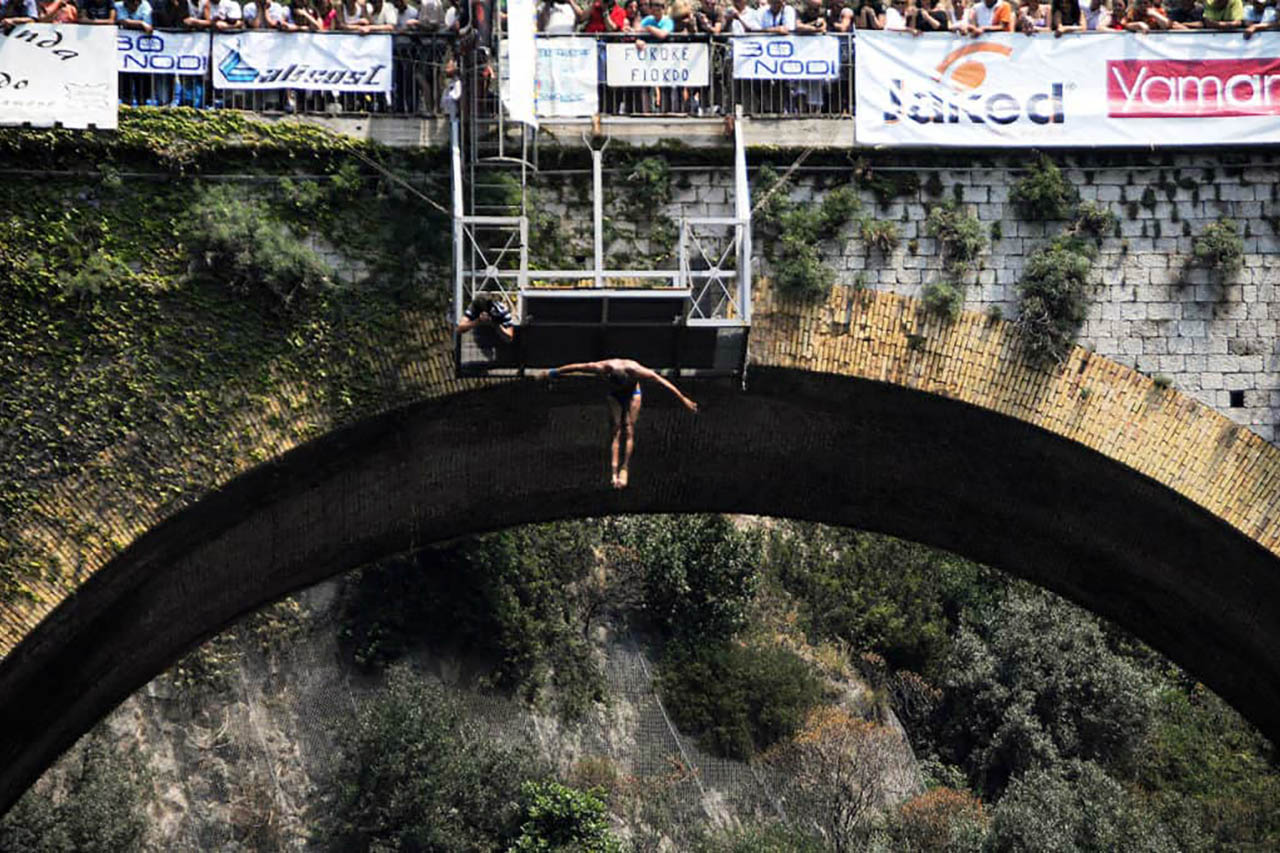
Photo Courtesy Archivo M. Capodanno
The stage to fly to Furore
To host a world acrobatic diving championship of this magnitude it is difficult to imagine a more picturesque setting than the Furore fjord. One of the two unique fjords in Europe (second only to the Bay of Kotor, Montenegro) of fluvial origin.
Under the large arch of the bridge a sheet of sea lies on the shore of the seaside village, and the dismembered mountain hinge that runs steeply from the Agerola plateau to the sea, sculpted by the Schiato river, decrees an eternal platonic love between the two margins of rock. You can reach the ancient village by sea or via the rustic staircase that winds towards the bay.
Roberto Rossellini’s love for Furore
The placid and dreamlike atmosphere that you breathe evokes memories of the film “Amore”, filmed here with the director Roberto Rossellini and Anna Magnani in 1948.
All that remains of their tormented love are two fishermen’s monazzeni (old tool depots, ed.) who bought here and who the locals still associate with them. Lush tree embryos nestle between the cracks of the rocky ridge and the impetuous voice of the sea echoes the fury that is the soul of the place.
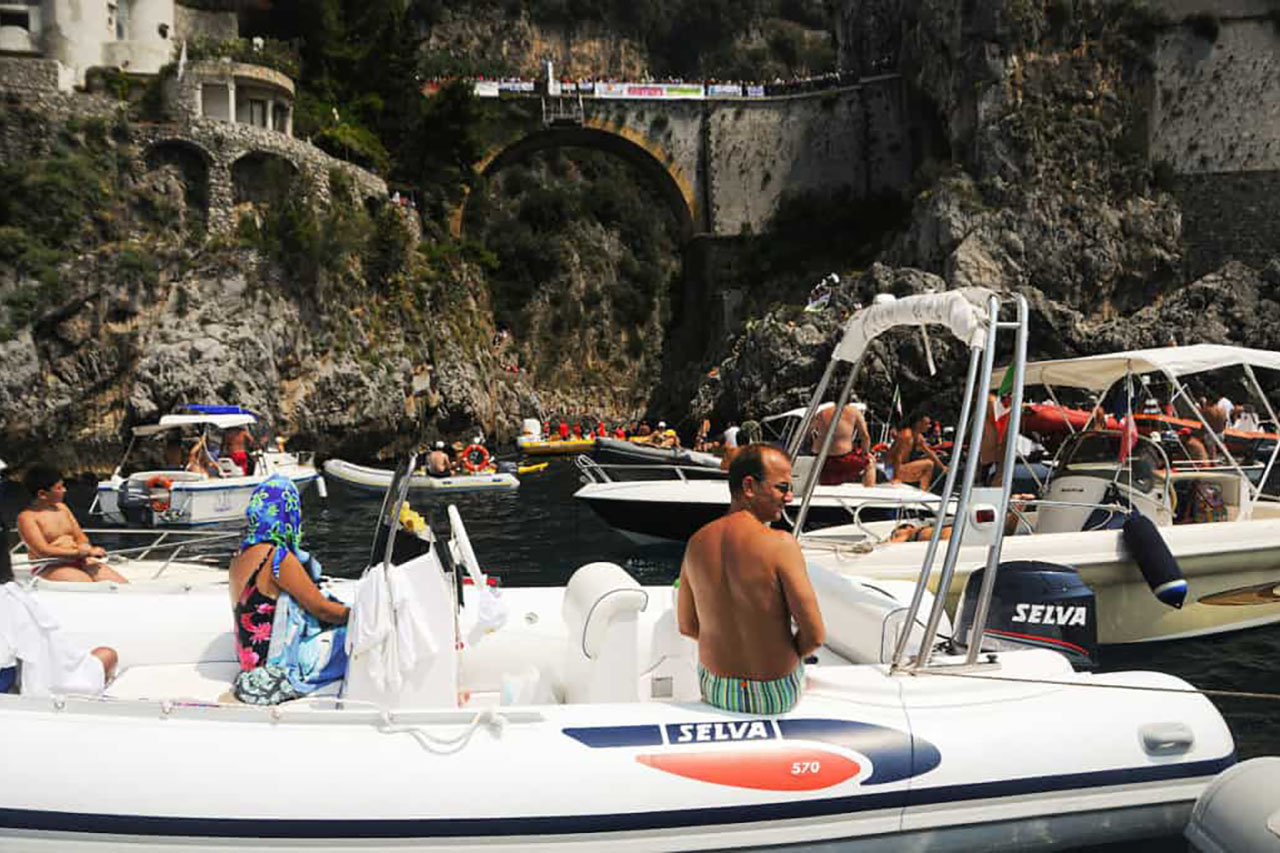
Photo Courtesy Archivo M. Capodanno
Adrenaline, sport and nature
The diving competition has gradually attracted more and more tourists and locals, making use, in the last year of the event, of the collaboration with the famous international circuit of the Red Bull Cliff Diving World Series.
Without forgetting the presence of local television. Adrenaline, sport, nature, and the enchantment of a unique beauty in the world create perfect harmony in this corner of the coast. On the other hand, anyone who crosses the Furore bridge, at least once in their life, cannot help but stop their gaze on that scar in the rock, just as if they felt the slight tug of a child pulling on the edges of their dress to arouse attention.
 Circumirando - Il viaggio a "mondo" nostro